
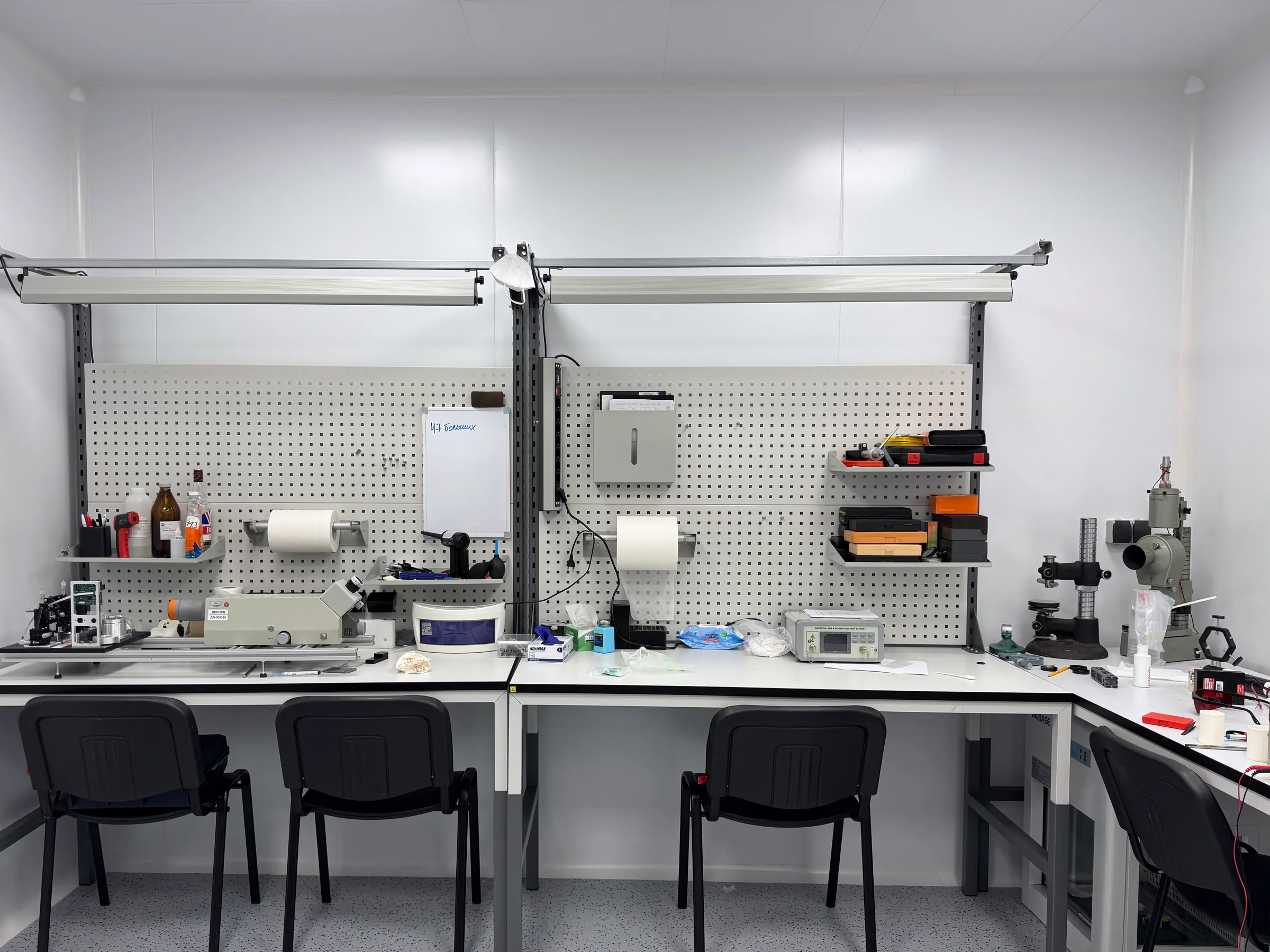
Optical assembly in ISO 6 cleanrooms
We assemble and inspect optical units in a controlled environment. Cleanrooms support projects where contamination of surfaces and components can affect performance or subsequent operation.
Our ISO 6 cleanrooms cover 16 m². A laminar-flow cabinet and glovebox are available for specific operations.
When a cleanroom is required
We include cleanroom assembly when the condition of surfaces and components affects the result.
- Contamination of optical surfaces can change transmission, light scattering or image quality.
- The product contains sensitive components that will be difficult to access after assembly.
- The technical brief specifies cleanliness requirements for assembly or inspection.
- A prototype or production unit must be prepared for the next operation without renewed contamination.
We assess the design, surface requirements, operation sequence and acceptance criteria.
What we can do
The exact sequence depends on the product design and its subsequent integration requirements.
- Prepare sensitive optical components for assembly.
- Assemble an optical or optomechanical unit in the clean zone.
- Perform agreed inspections without unnecessary transfers between rooms.
- Prepare an assembled unit for testing, integration or delivery to the client.
Before the project starts, we agree the operations, tooling, component handling procedures and inspection checkpoints.
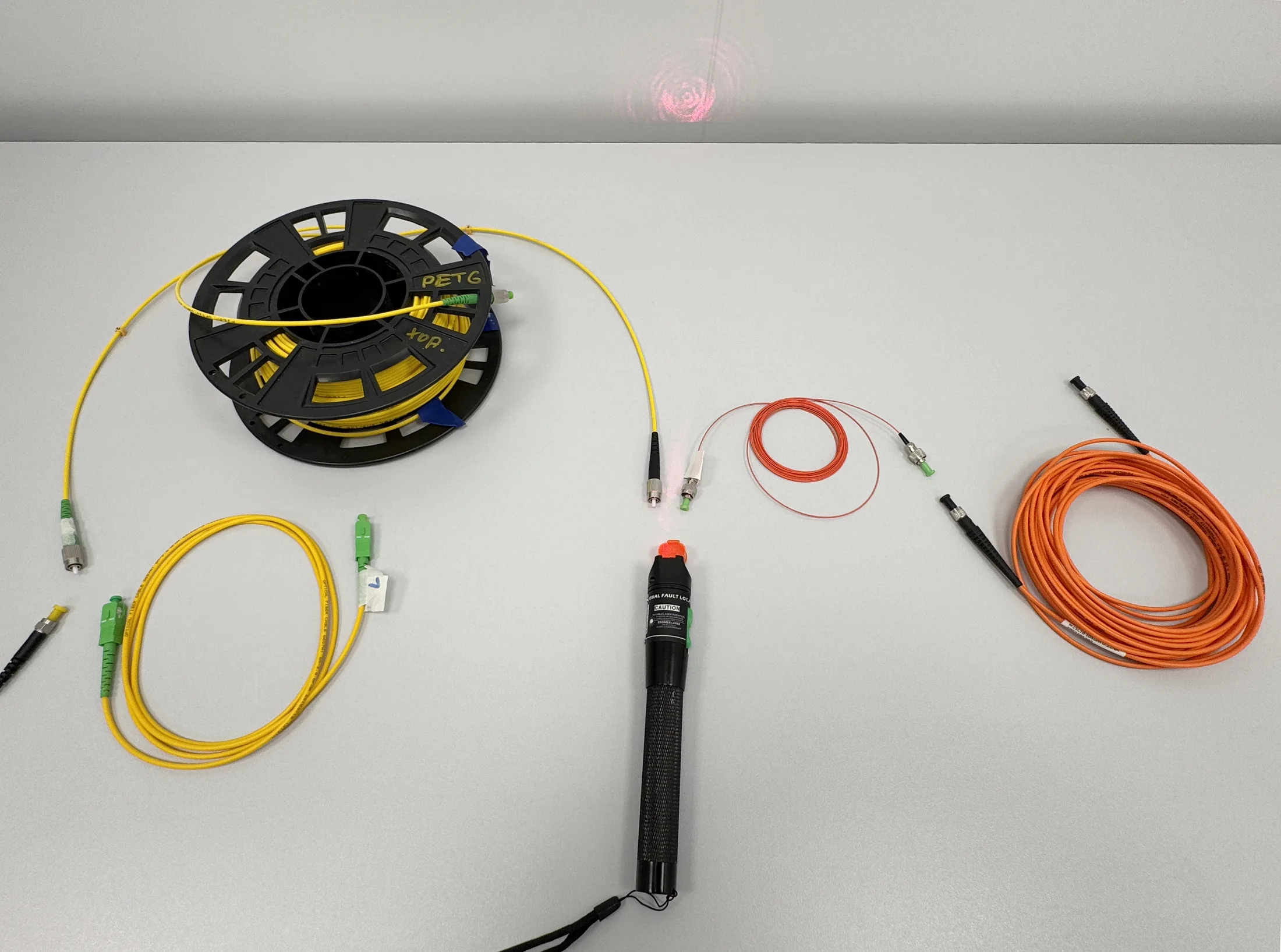
Preparation and testing of optical fibre in a cleanroom environment.
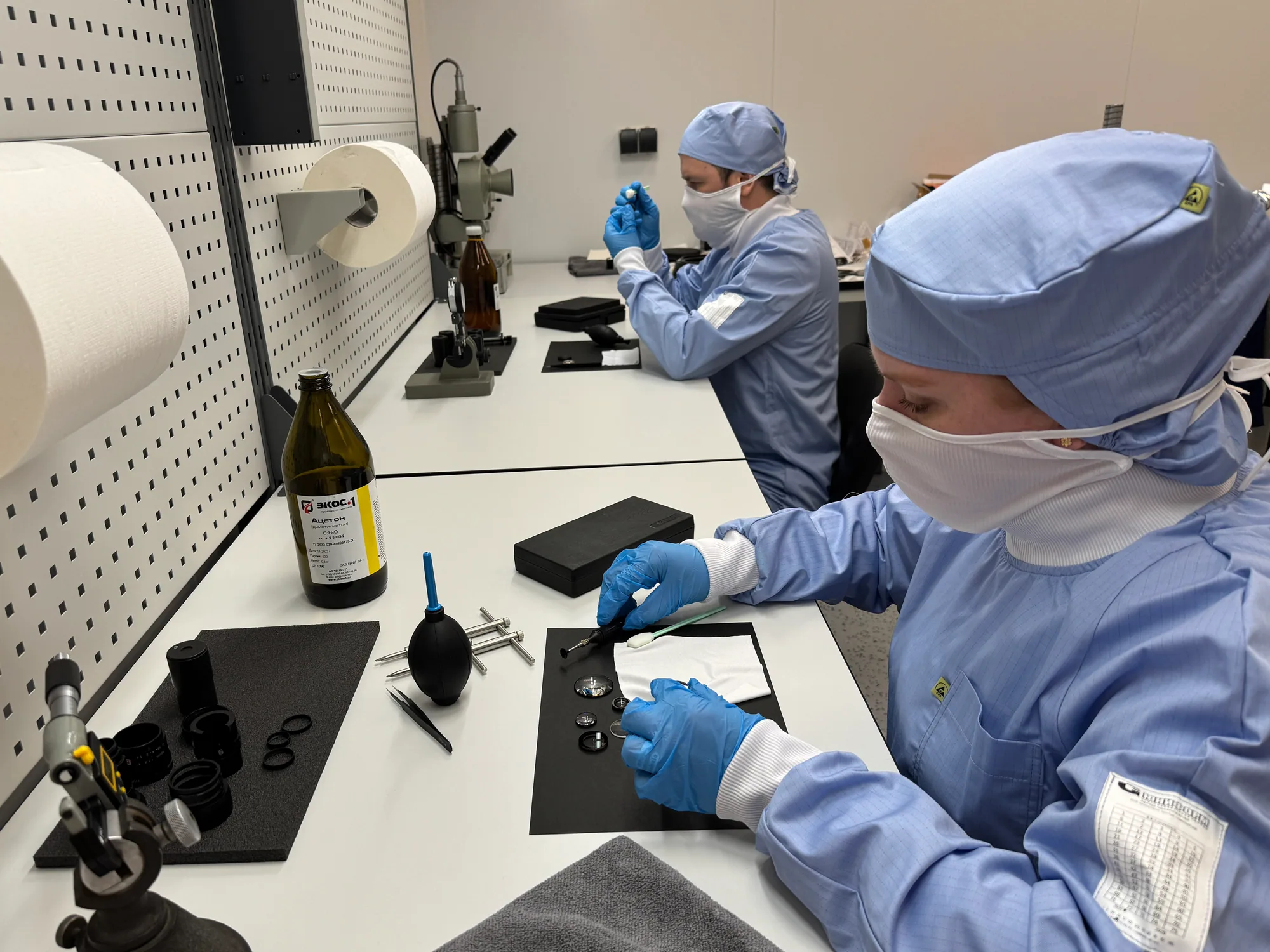
Protective equipment and operating procedures are selected for the requirements of the product.
Equipment and working procedures
A laminar-flow cabinet is available for operations requiring particularly clean conditions. A glovebox supports work requiring an isolated or vacuum environment.
Specialists use dedicated clothing, masks and gloves. Protective equipment and operating procedures are selected for the requirements of the product.
Integrating the clean zone into a project
We define the operation sequence and inspection criteria before assembly starts.
- 01
Review the requirements
We clarify the design, critical surfaces, acceptable contamination and inspection criteria.
- 02
Prepare the process
We define the operations, assembly sequence, tooling and component handling conditions.
- 03
Perform the work
We carry out the agreed operations in the cleanroom, using the cabinets where needed.
- 04
Inspect the product
We check the product against the agreed criteria and prepare it for the next stage.
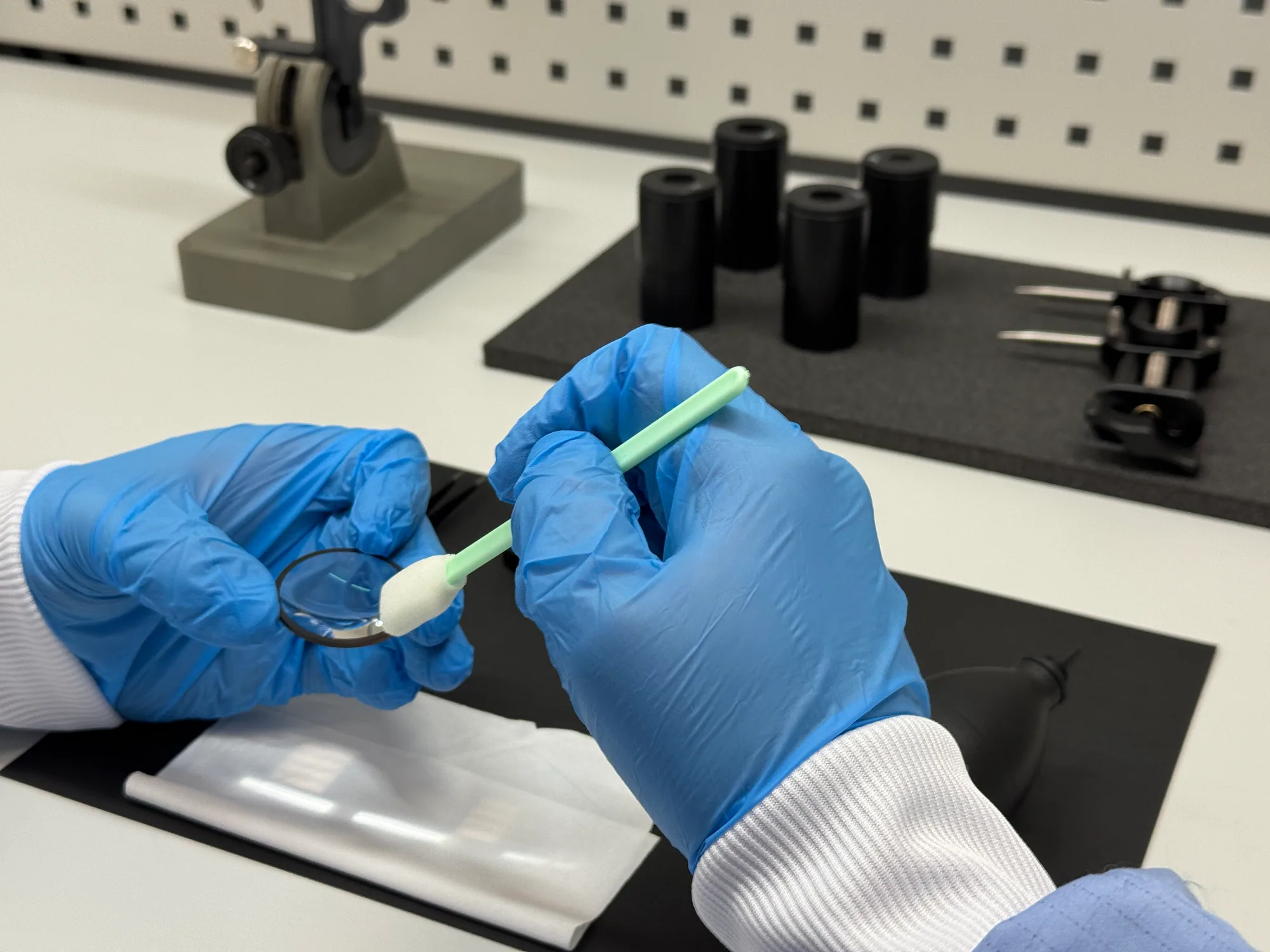
Critical surfaces are inspected and handled in the agreed sequence.
Prototyping and production
The clean zone can support prototype manufacturing, one-off assembly or small-batch work. Cleanliness requirements are best defined before the assembly process is developed, so that operations, tooling and inspection can be planned accordingly.
If a project starts with an idea or optical calculations, prototyping is a suitable first step. Products with complete documentation can move to contract manufacturing and assembly.
Before we start
Answers to common questions before an initial project assessment.
01What does ISO 6 mean?
ISO 6 specifies the permitted concentration of airborne particles in a cleanroom. A project must also define which operations will take place in that environment.
02When does an optical system need cleanroom assembly?
Cleanroom assembly is needed when surface contamination can affect performance, access to components will be restricted after assembly, or the technical brief explicitly requires it.
03Is an ISO 6 cleanroom suitable for prototype assembly?
Yes, if cleanliness matters at the prototype stage. Our team will identify the operations to perform in the clean zone and the parameters to check afterwards.
04Which operations are performed in the clean zone?
The basic scope includes component preparation, optical assembly and agreed inspection operations. The specific sequence depends on the design and product requirements.
05What are the laminar-flow cabinet and glovebox used for?
The laminar-flow cabinet is used for operations requiring particularly clean conditions. The glovebox supports work in an isolated or vacuum environment when required by the project.
06What should I send for an assessment?
Send a technical brief, drawings, a 3D model, a component specification or a short product description. Include cleanliness requirements, critical surfaces and acceptance criteria if known.
Discuss cleanliness requirements
Send a technical brief or product description. Our team will review the requirements and propose which operations to perform in the ISO 6 cleanroom.