
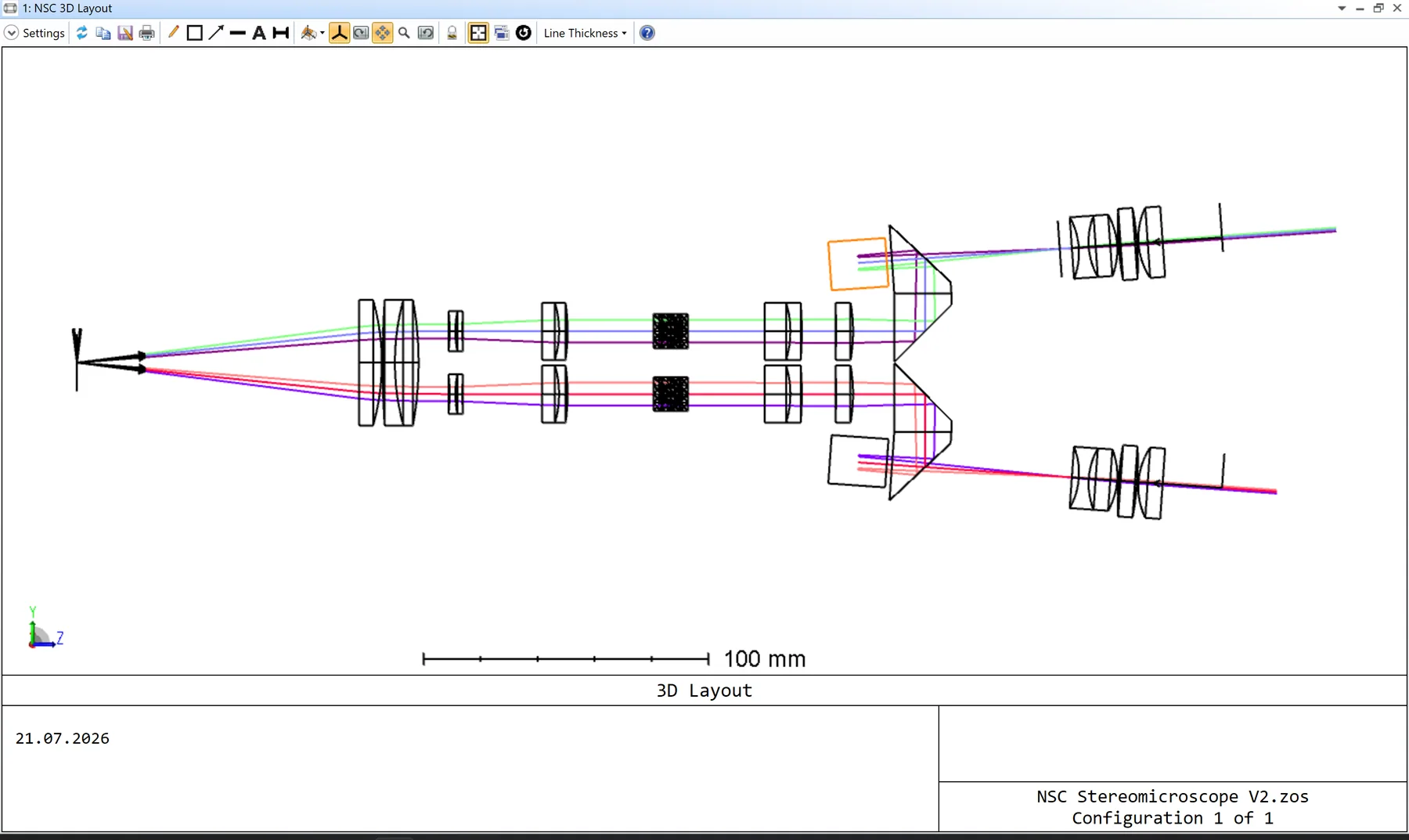
Optical systems designed for your application
We design an optical system to meet the requirements of your instrument or experimental setup. We select the optical layout, calculate its parameters and assess the effects of mechanics, temperature, stray light, materials and operating conditions.
You can start with a complete technical brief, a description of the task or an existing design. The result is an agreed engineering solution ready for prototyping or production.
When optical design is needed
We work on new developments and analyse existing optical systems.
- You need the optical subsystem for a new instrument, module or experimental setup.
- You need to check technical feasibility before manufacturing components.
- An existing optical system does not meet its target parameters and needs analysis.
- The design must account for dimensions, mechanics, temperature, vibration or stray light.
- The optical design needs to be prepared for a prototype, assembly or series production.
KOMPAS / SolidWorks / Zemax OpticStudio / COMSOL Multiphysics / Matlab / Python
Where to start
For an initial assessment, describe the purpose of the system, target parameters and known constraints. If materials are already available, attach a technical brief, drawings, sketches, a 3D model, an existing optical layout or previous calculation results.
Our team can help clarify the requirements if a complete technical brief is not yet available. Before starting the design, we agree the critical parameters, acceptable trade-offs and deliverables.
The optical design process
Each stage refines the solution and reduces risk before a physical sample is manufactured.
- 01
Review the task
We clarify the purpose of the system, operating range, image or beam requirements, dimensions and operating conditions.
- 02
Design the optical system
We select the layout, materials and components. Where needed, we compare alternatives in Zemax and other specialist software.
- 03
Check the constraints
We assess tolerances, stray reflections and the effects of mechanics and temperature. For coupled physical processes, we use COMSOL, Ansys and related tools.
- 04
Prepare the deliverables
We document the selected solution, calculated parameters, constraints and agreed set of materials for the next stage.
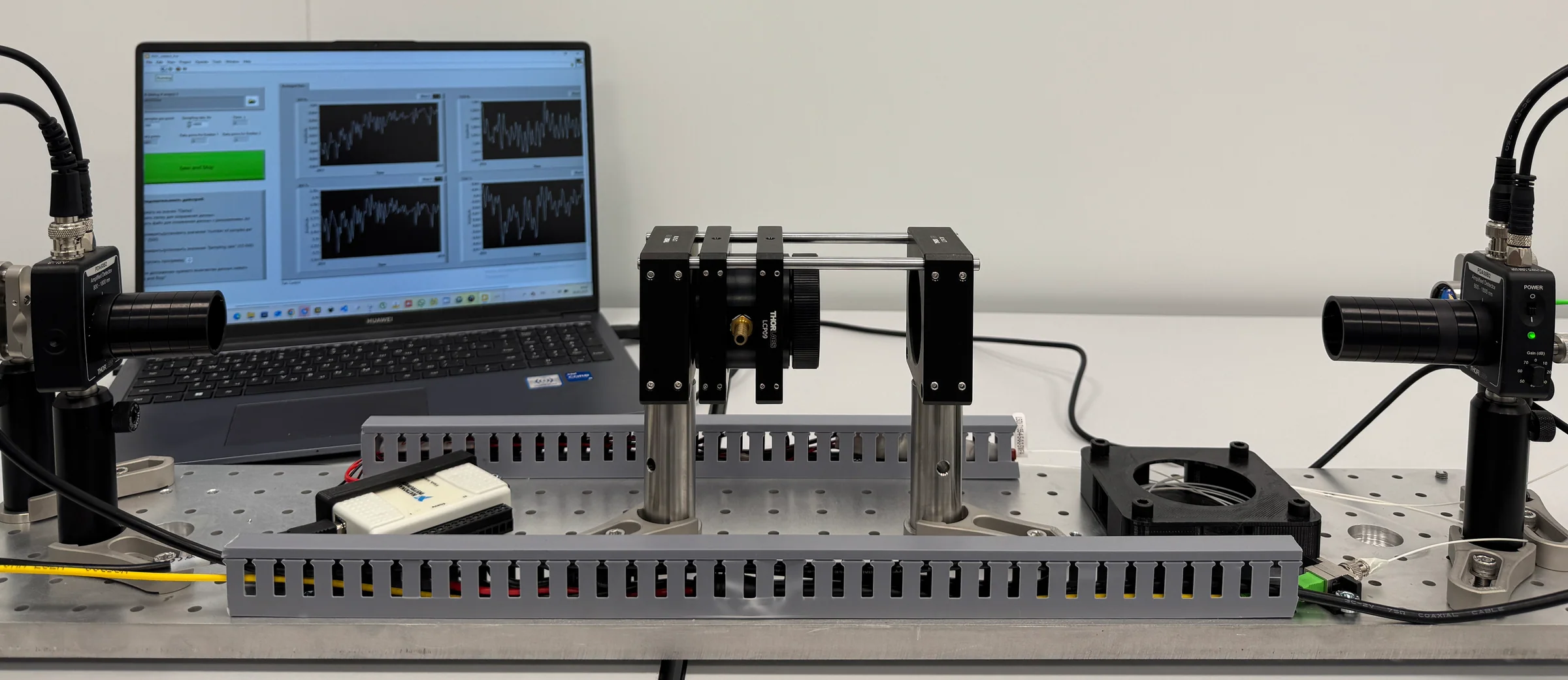
We verify the calculated design on a laboratory setup with measurement equipment.
What you receive
The deliverables are agreed before work starts and depend on the next stage of the project.
- An optical layout and modelling results.
- The rationale for the selected design and a feasibility assessment.
- Requirements for materials, components, tolerances and mechanical design.
- Recommendations for assembly, alignment and testing.
- Design or technical documentation within the agreed scope.
Design informed by the physical product
Our optical design team includes five optical engineers, three of whom hold Candidate of Sciences degrees, equivalent to a PhD. For computationally intensive models, the team uses dedicated computing servers.
Optical designers work alongside mechanical design, assembly and testing specialists. This allows manufacturing, alignment and inspection requirements to be considered before they affect the physical product.
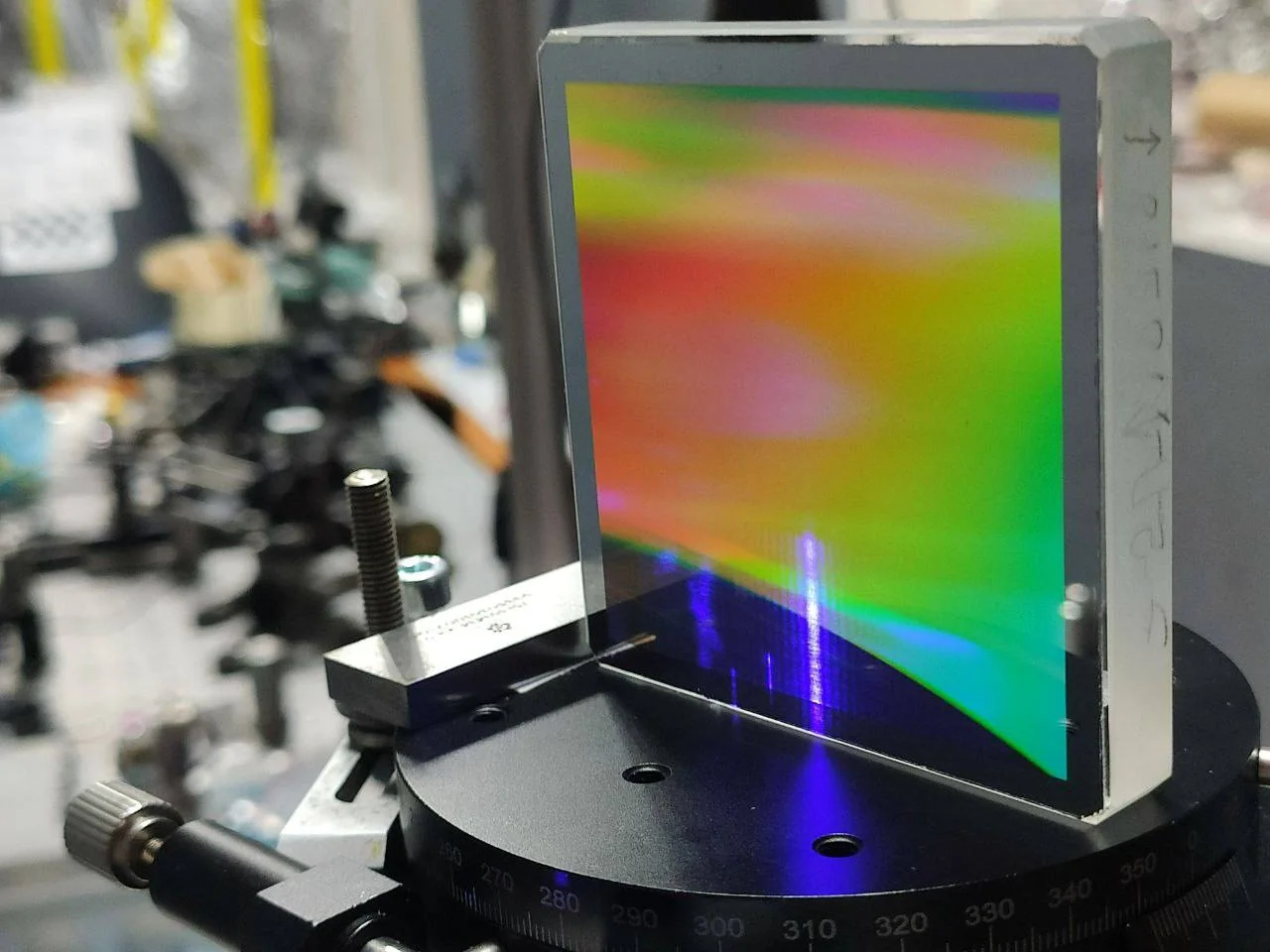
Design constraints are checked against materials, coatings and practical inspection conditions.
Before we start
Answers to common questions before an initial project assessment.
01How much does optical design cost?
The cost depends on the completeness of the input data, the complexity of the optical system, the number of alternatives, the scope of modelling and the required documentation. For an estimate, send a technical brief or a short description with the key parameters.
02How long does optical design take?
The schedule depends on system complexity, the readiness of the input data and the level of detail required. After an initial review, our team will propose project stages and a schedule.
03Can we start without a complete technical brief?
Yes. Describe the purpose of the system, target parameters and constraints. Our team will identify the points to clarify and help prepare the requirements for optical design.
04Can you improve an existing optical design?
Yes. We will need the available design files, parameters, drawings and a description of the problem. Our team will investigate the deviations and propose design changes.
05Can we order a prototype after the design stage?
Yes. The design can move into prototyping to build a physical sample, align it and verify the key parameters in the laboratory.
Discuss optical design
Send a technical brief, drawing, 3D model or description of the task. Include the purpose of the system, critical parameters and known constraints. Our team will review the materials and propose the next step.