
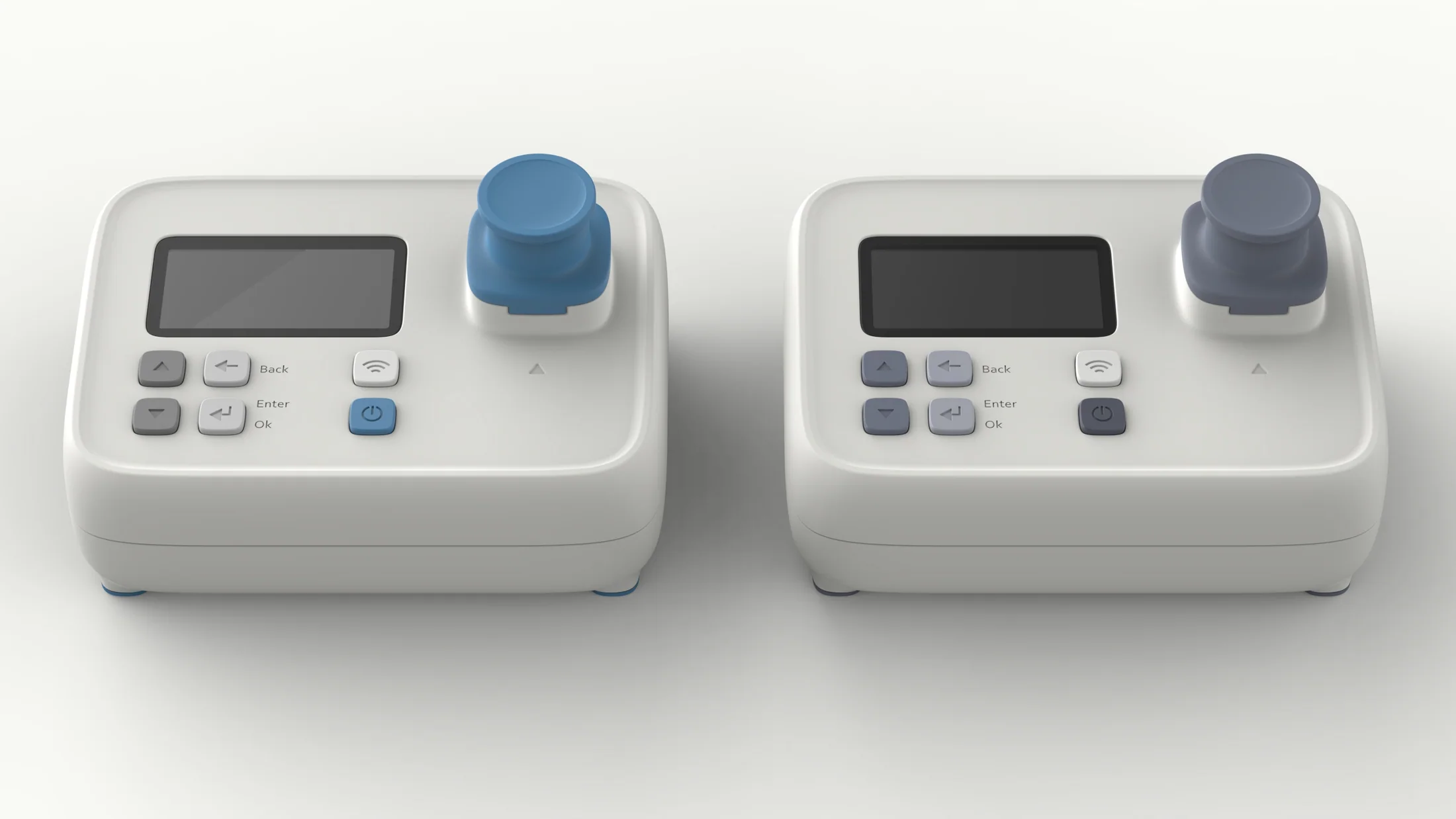
Contract manufacturing and assembly of optical systems
We manufacture and assemble optical and optomechanical units, then align and test them against technical specifications, engineering documentation, drawings and 3D models. Our work ranges from one-off units and prototypes to pilot and small batches.
Our production workflow brings together part manufacturing, incoming inspection, assembly, alignment and technical verification. ISO 6 cleanroom assembly is available when cleanliness requirements call for it.
When contract manufacturing is the right fit
We can perform individual production operations or manage the whole process, from documentation review to testing.
- You have completed documentation but no facility for manufacturing and optical assembly.
- You need a one-off unit, a prototype or a small batch.
- You need assembly, optical bonding, alignment or parameter verification as a separate service.
- A prototype needs to be prepared for repeatable manufacture.
- You plan to transfer an established process to your own production site.
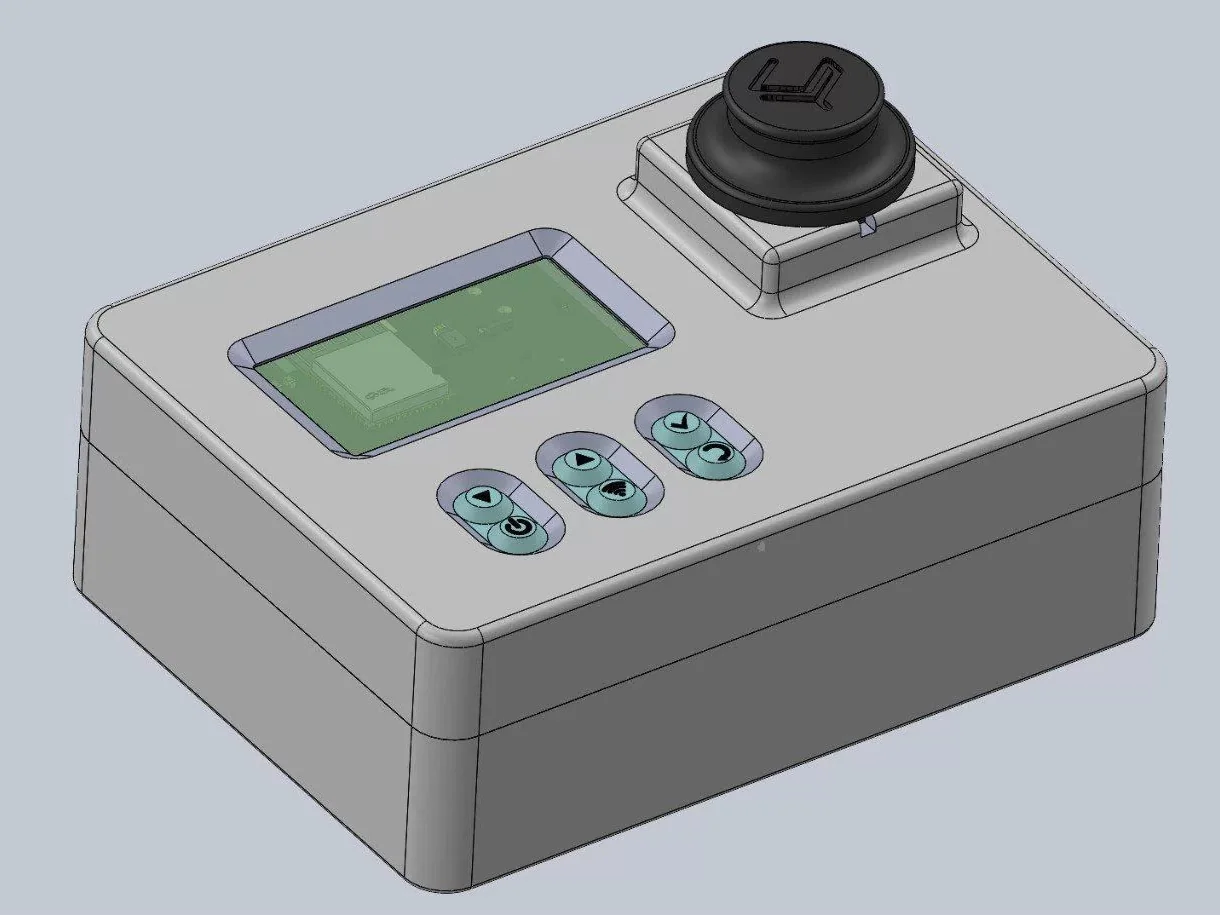
The instrument model connects engineering documentation with the future assembly.
What to send for an assessment
To begin, you can send technical specifications, engineering documentation, working and assembly drawings, 3D models, bills of materials, an optical layout, alignment requirements and inspection methods. If the documentation is incomplete, you can provide an existing prototype and the required quantity.
Before production starts, we agree the scope of work, parameters to verify, acceptance requirements, component-supply arrangement and responsibilities.
How production works
We agree the sequence of operations and inspection points before work begins.
- 01
Review the documentation
We assess whether the engineering documentation is complete, whether dimensions and tolerances are consistent, how manufacturable the design is and how the finished product can be verified.
- 02
Prepare production
We define the sequence of operations, tooling, inspection points and the components to manufacture or purchase.
- 03
Inspect incoming parts
We check completeness, geometry and part condition before assembly to identify discrepancies early.
- 04
Assemble the system
We carry out mechanical assembly, install or bond optical elements and perform intermediate checks. Sensitive operations can be moved to an ISO 6 cleanroom when needed.
- 05
Align and test
We adjust the relative positions of components and verify the agreed optical, mechanical and functional parameters.
- 06
Deliver the product and results
We prepare the units and the agreed inspection, assembly or process documentation.
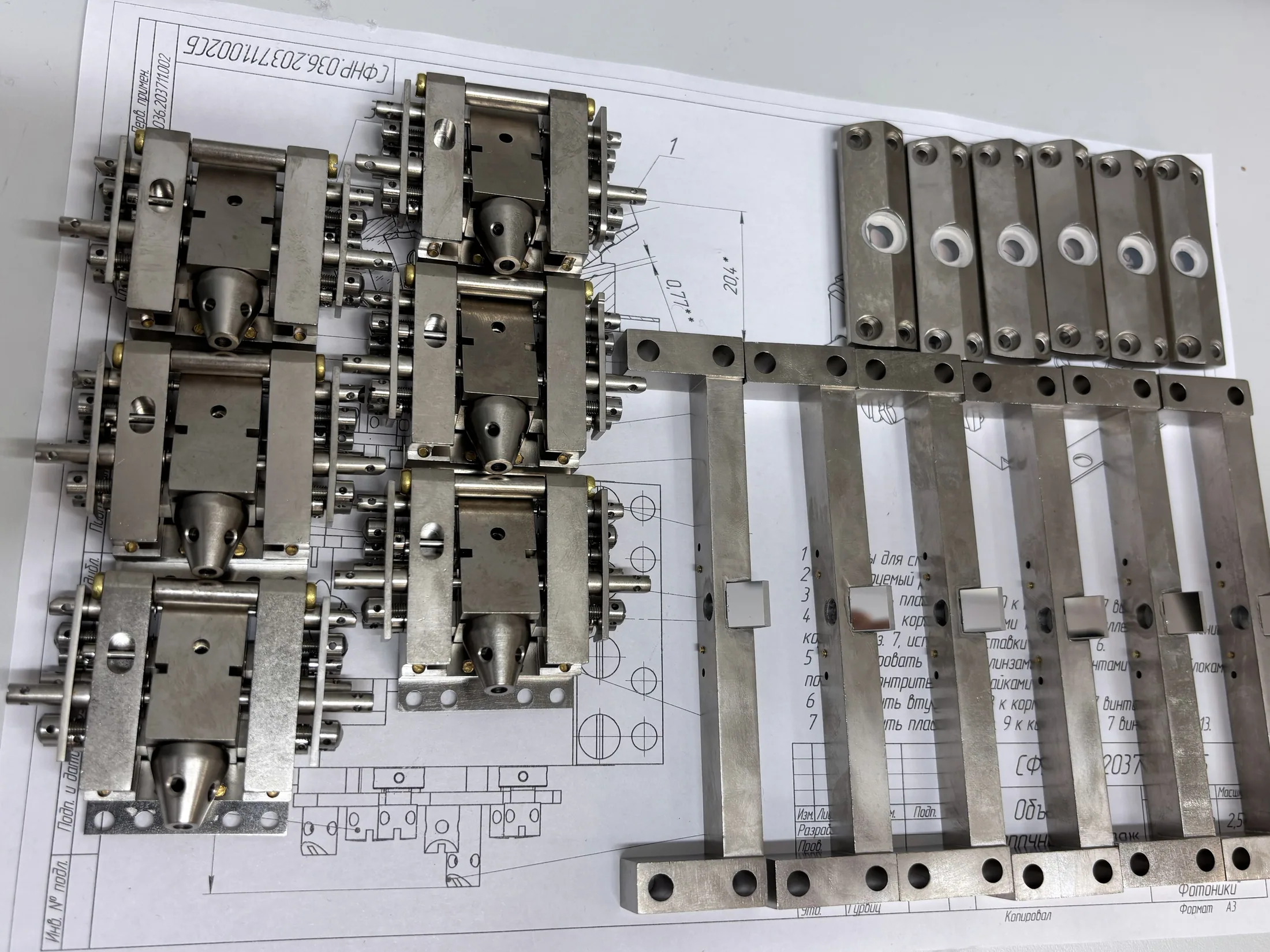
We manufacture housings and mechanical components with subsequent assembly and inspection in mind.
From a one-off unit to repeatable production
The production format depends on design maturity, batch size and acceptance requirements.
Production formats
- A one-off unit or prototype made to completed documentation.
- A pilot batch to verify the assembly process and repeatability of inspection.
- A small batch with agreed operations, acceptance parameters and delivery schedule.
- Process and documentation preparation for repeat production or transfer to another site.
What you receive
- A manufactured optical or optomechanical assembly.
- An assembled and aligned system.
- Inspection and agreed test results.
- A record of any deviations and engineering decisions taken.
- Assembly and process documentation in the agreed scope.
Engineering and production resources
Projects can draw on our optical laboratory, ISO 6 cleanrooms, metalworking facilities, assembly areas and alignment equipment. Optical designers, mechanical engineers and production specialists can review discrepancies together, keeping the documentation connected to the physical product.
If external partners are needed, we agree the outsourced operations, supplier requirements and incoming inspection process in advance.
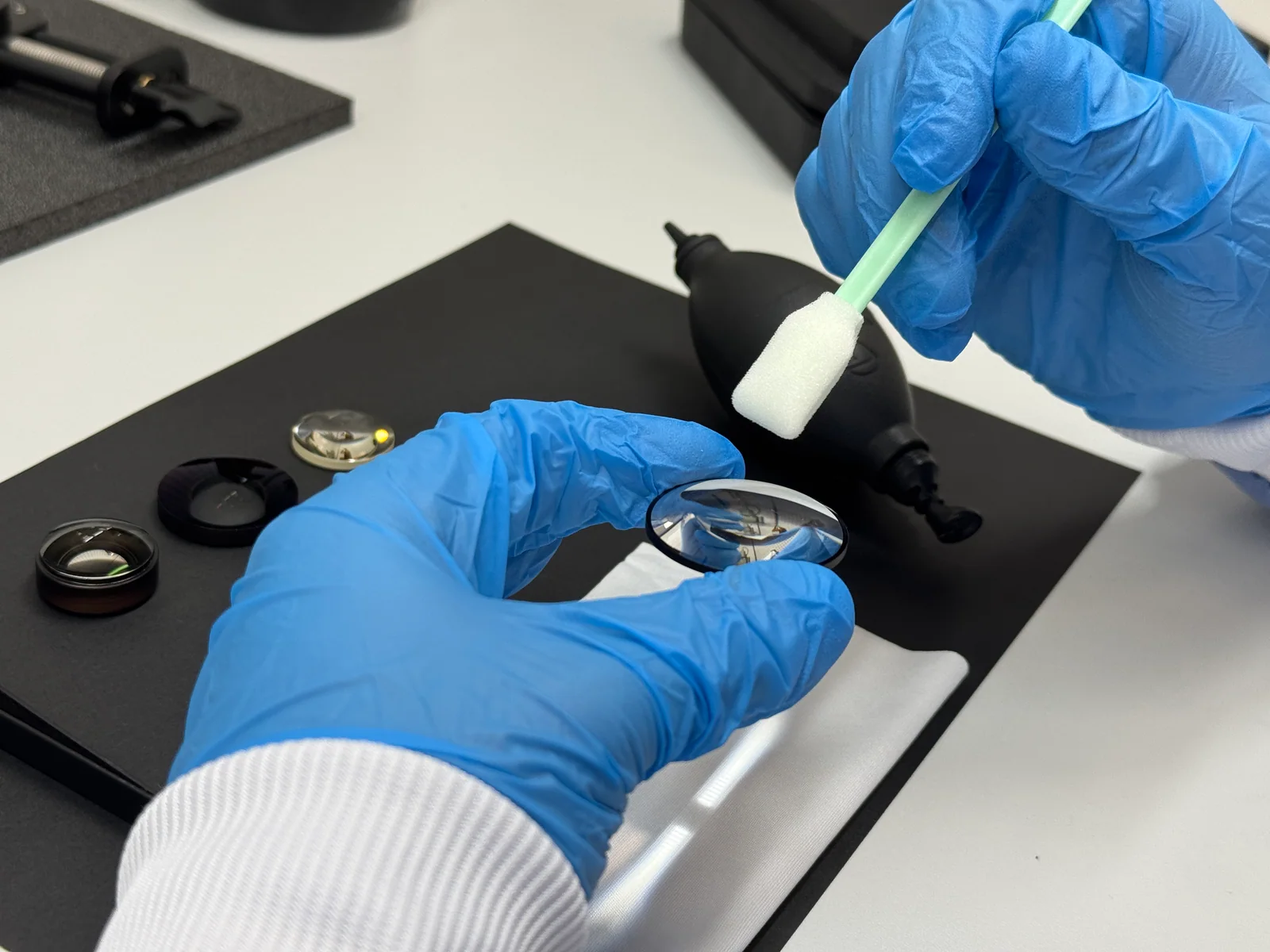
Optics preparation and sensitive assembly operations in a controlled environment.
Towards repeatable production
Before making a small batch, we assess which aspects of the prototype are suitable for repeat production. This may require refined tolerances, replacement of temporary components, new tooling and formalized assembly operations.
If further production is planned at the customer's site, the project can include process documentation, alignment instructions, inspection procedures, training and support for the first assemblies.
Before we start
Answers to common questions before an initial project assessment.
01Can we order assembly or alignment only?
Yes, if you provide the components and documentation needed to carry out and verify the work. Before starting, our team will assess completeness, adjustment provisions and available inspection methods.
02Can you make a one-off unit?
Yes. We work with one-off units, models, prototypes and small batches. The preparation needed depends on the design's complexity and the required tooling.
03Who purchases components and materials?
Components can be supplied by the customer, purchased by us, or sourced through a combination of both. We agree responsibility for the bill of materials, lead times and incoming inspection before work begins.
04When is ISO 6 assembly needed?
A cleanroom is needed when surface contamination could affect product performance, reliability or acceptance. We determine which operations require a controlled environment after reviewing the documentation.
05What will the work cost and how long will it take?
An estimate depends on the readiness of the engineering documentation, component count, batch size, scope of alignment, testing and procurement. After reviewing your materials, we will outline the work, stages and a preliminary schedule.
06Can we hand over an existing prototype for production preparation?
Yes. We will review the prototype, documentation and test results, then propose changes for a pilot or small production batch.
07Do you provide technology transfer?
Yes, when it is part of the project. Deliverables may include documentation, the assembly sequence, tooling requirements, alignment instructions and support for the first units.
08Can you work under an NDA?
Yes. We can agree an NDA and a process for exchanging confidential materials before you send engineering documentation. We do not disclose customer or product information without permission.
Discuss manufacturing
Send us your technical specifications, engineering documentation, drawings, 3D model, bill of materials or photographs of an existing prototype. Please include the required quantity, assembly requirements and target schedule.