
Engineering project archive
Fibre-optic connector
Two optical channels in a precision housing
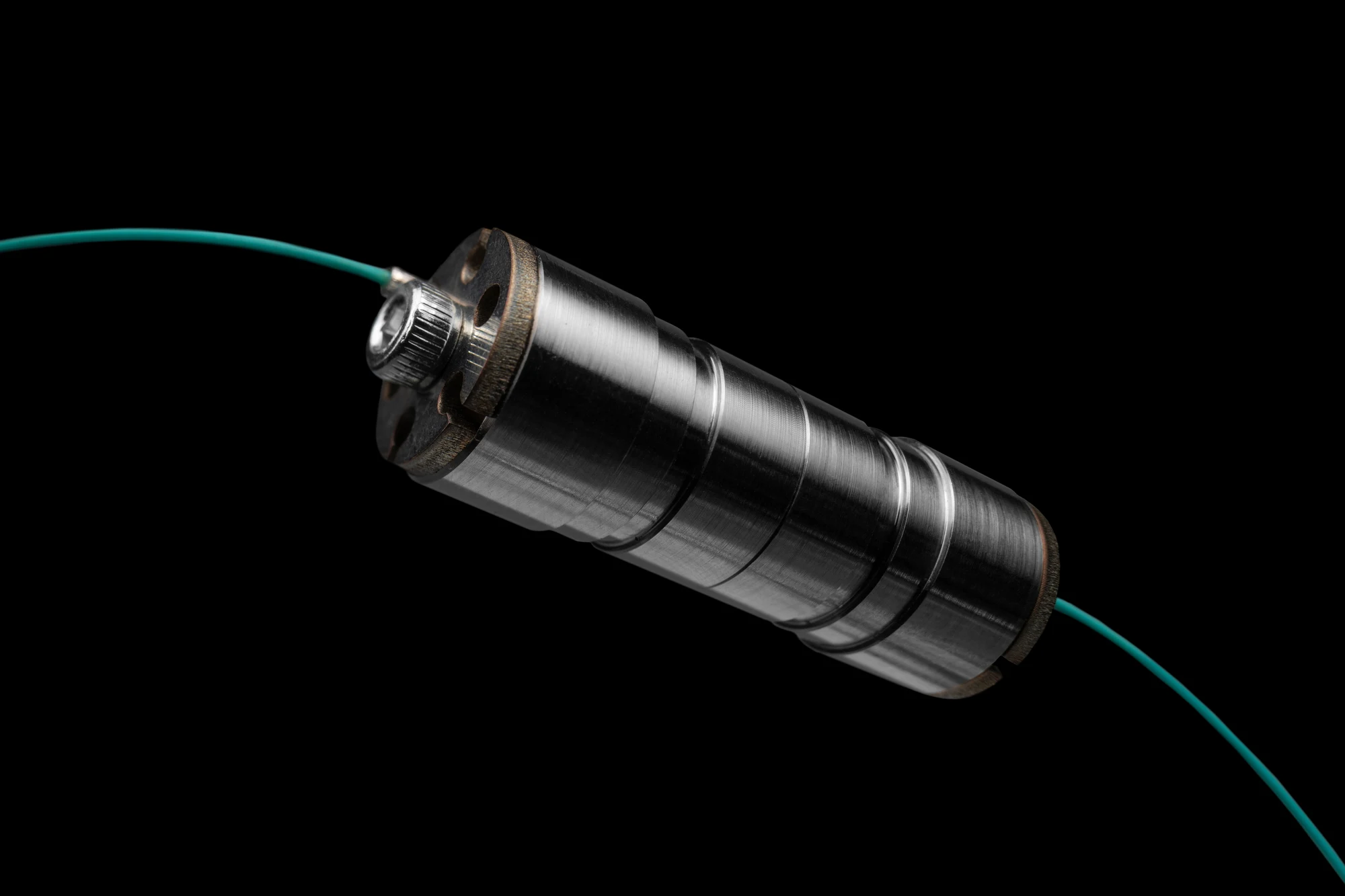 PHOTO 01
Prototype of a two-channel lensed connector with fibres attached.
Initial task
Coupling fibres through lens optics
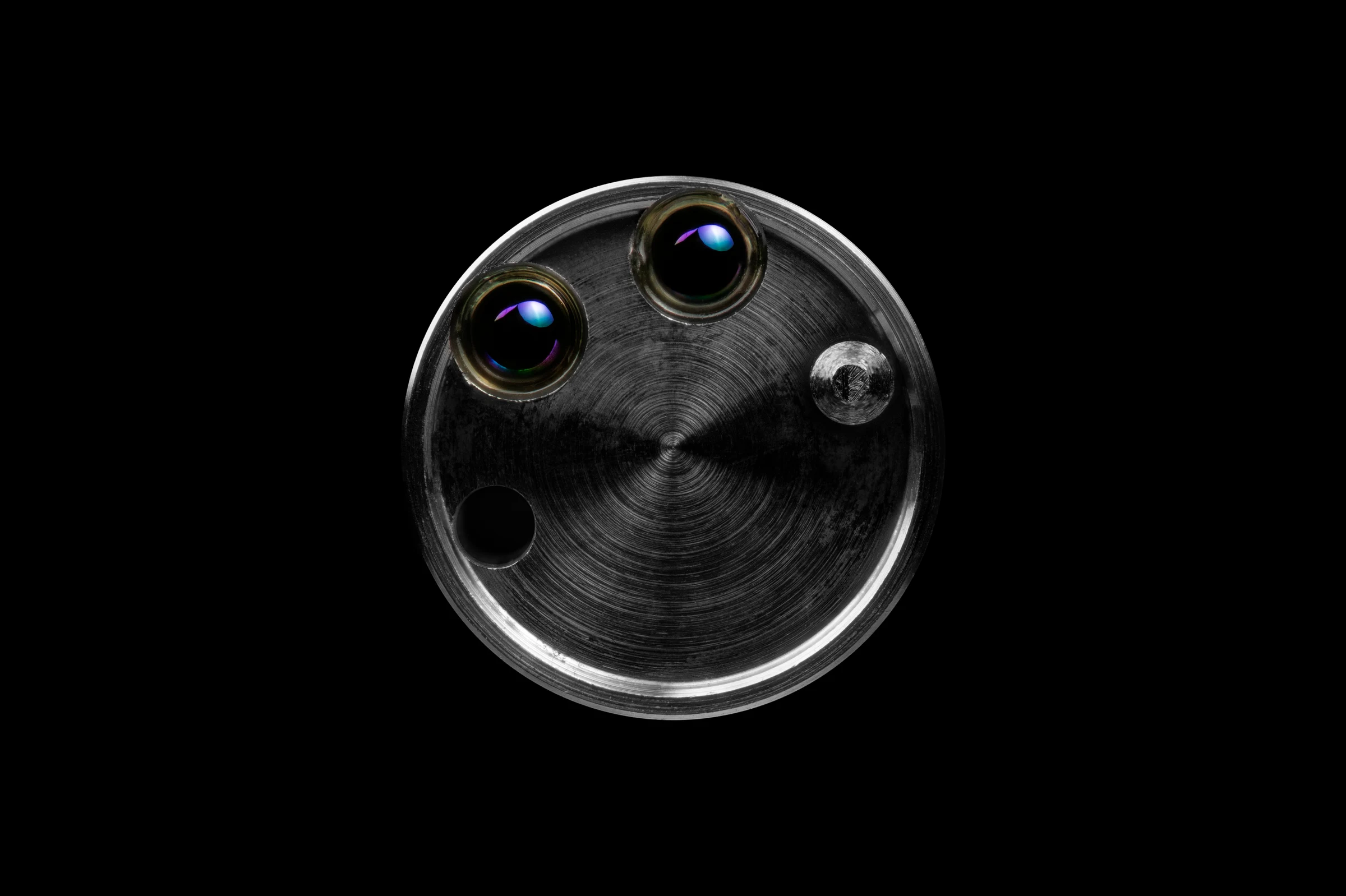
The project involved developing a two-channel fibre-optic connector with ball lenses. In each channel, one lens collimates the light from a fibre, while the opposing lens focuses it into the receiving fibre. Ferrules hold the fibre ends in place, and the housing and alignment features position the two halves of the connection.
The optics and mechanical design had to support repeatable assembly. Even a small displacement of a lens or ferrule changes the fraction of light coupled into the receiving fibre. Optical design was therefore linked to manufacturing tolerances and component fits from the outset.
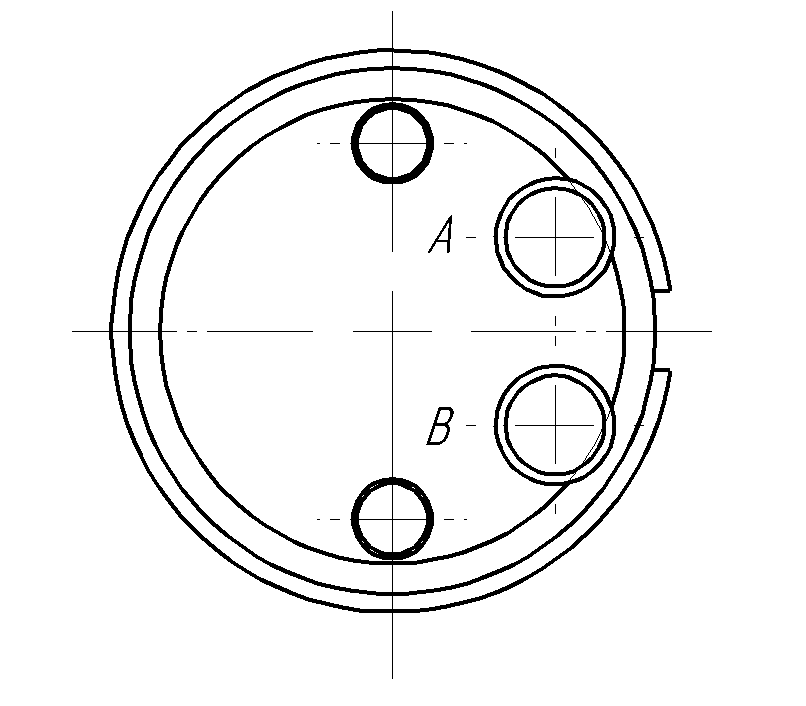
Optical design
Assessing sensitivity to misalignment
In Zemax, we compared ball lenses made from different glasses for single-mode and multimode fibres. High-index glasses reduced spherical aberration, but brought the focus close to the ball surface. This constrained the distance between the lens and the fibre end face.
We then introduced lateral displacements, tilts and relative positioning errors into the model. Monte Carlo analysis showed how random combinations of deviations affected light transmission. The single-mode design was more sensitive to assembly errors: a good nominal optical design also required a coordinated tolerance budget for the component interfaces.
Thermomechanics
Accounting for housing and adhesive expansion
The housing, lens and ferrule expand at different rates as temperature changes. We built a COMSOL model of the assembly, including the adhesive bond, and compared titanium, stainless-steel and aluminium housings. The analysis assessed relative lens-to-ferrule displacement that could affect optical coupling.
Titanium produced the smallest displacement in the model comparison. Adhesive properties and the shape of the adhesive around the lens also affected the result. These calculations informed the choice of materials and mounting method; the behaviour of the assembled unit required separate experimental verification.
Manufacturing and inspection
Refining component fits on prototypes
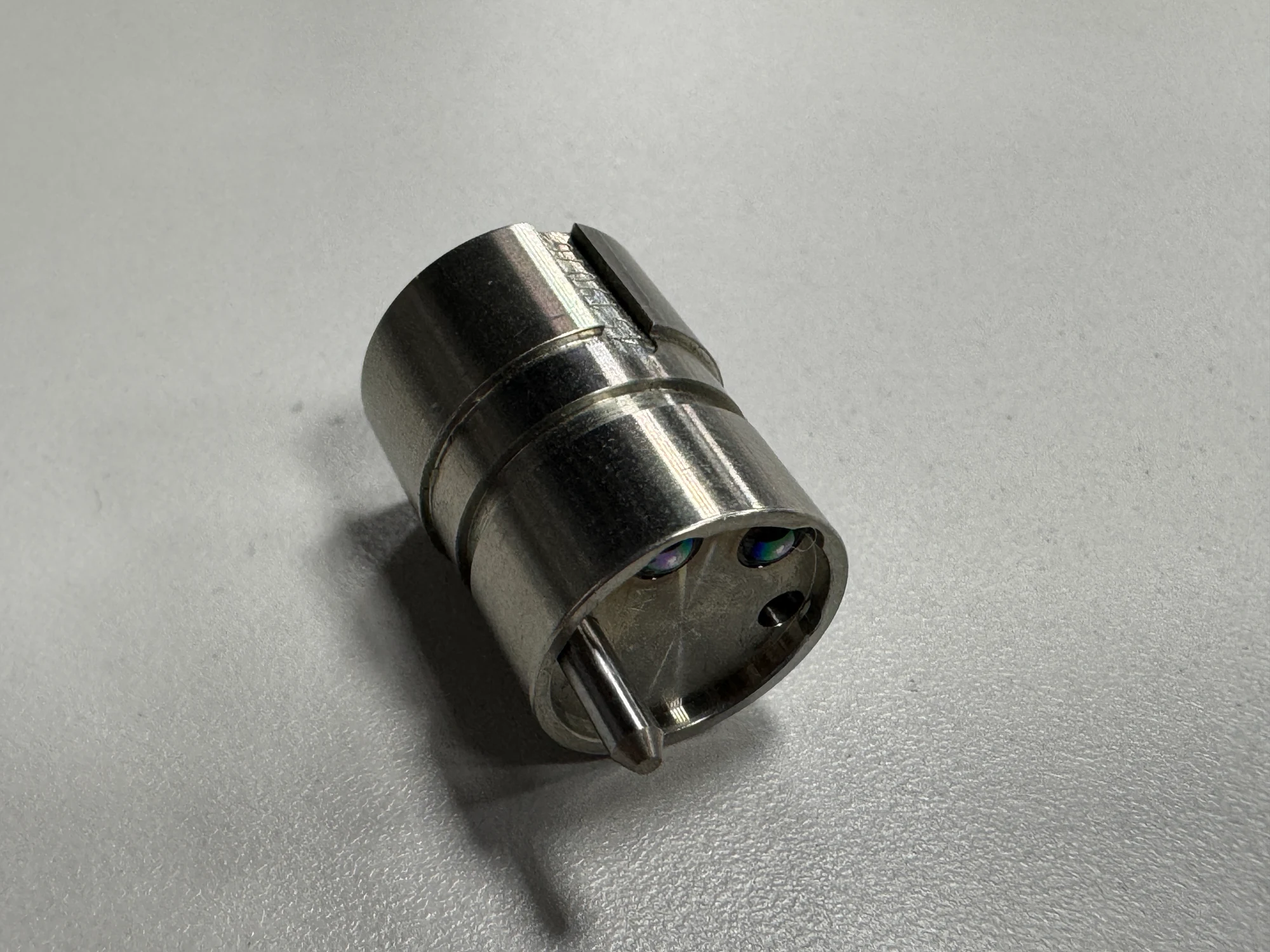
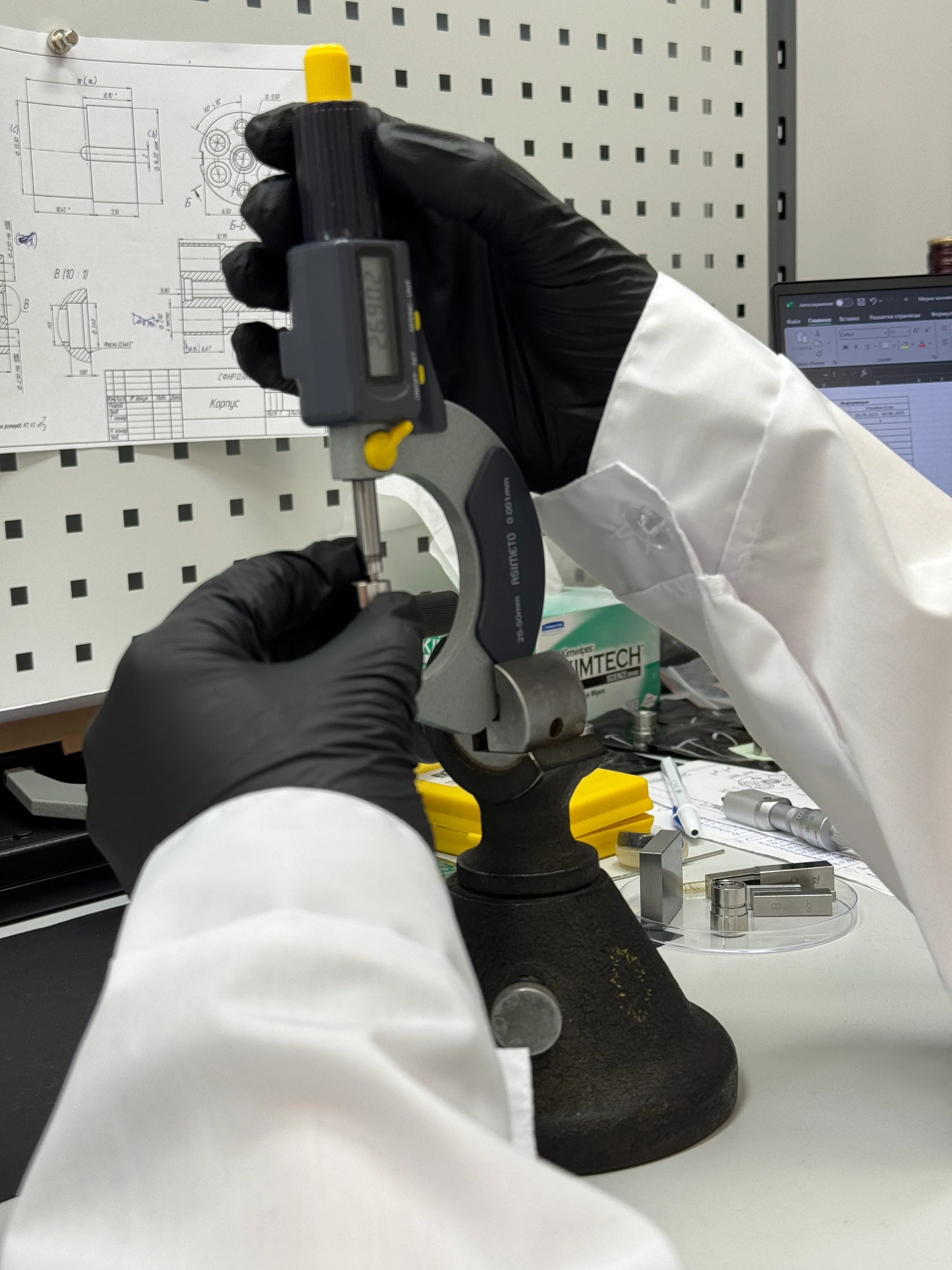
After manufacturing the housings, we checked ferrule bore diameters, alignment features and mating component dimensions. Electrical discharge machining and jig grinding were investigated for the bores, while measurement tooling was developed for dimensional inspection.
During assembly, we checked whether each ferrule reached its stop under its own spring force. Bore taper could obstruct seating, while clearance around the alignment pins could change the relative position of the connector halves. Measurements and feedback on successive housings informed refinements to machining and inspection requirements.
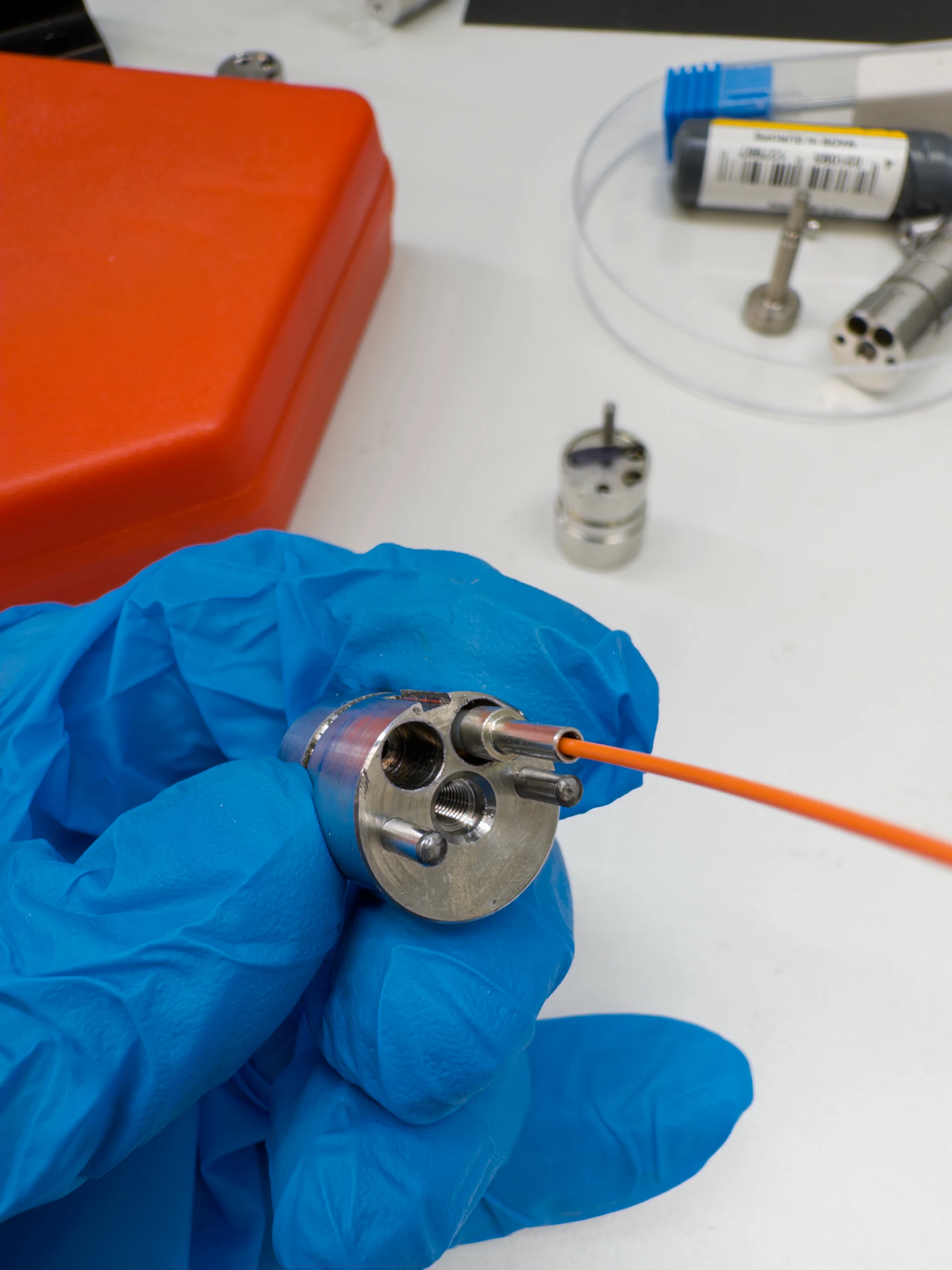
Optical assembly
Building prototypes with fibre channels
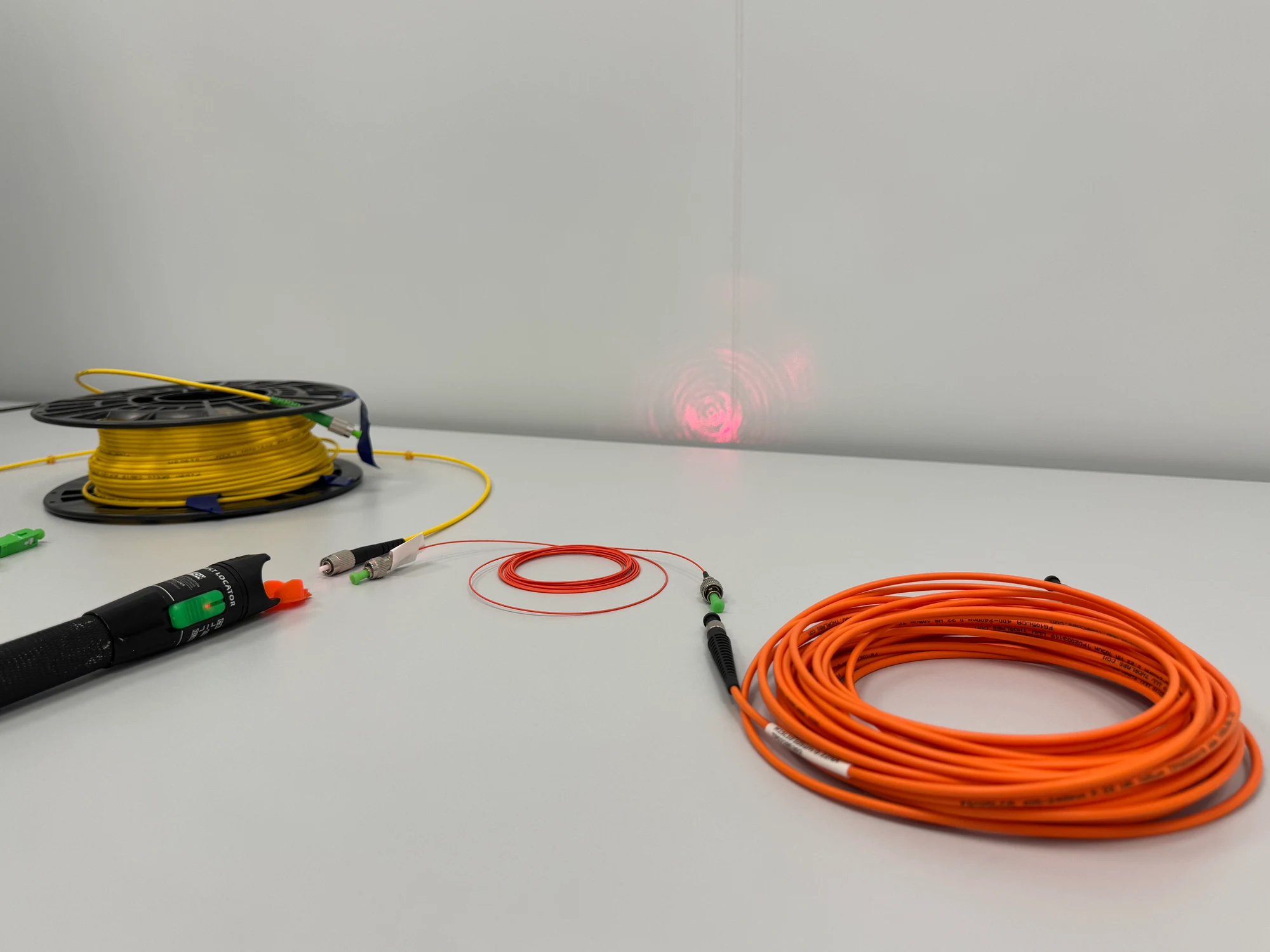
The prototypes were used to refine lens and ferrule installation, housing mating and fibre connection. Anti-reflection coatings for the ball lenses were investigated for the operating wavelength bands. Checks of light propagation through the fibre path were accompanied by preparations for measuring connection losses.
The work provided a modelling basis for selecting optics, materials and tolerances, while the prototypes identified fits that needed further refinement. The performance of a completed connection depends on manufacturing and assembly quality and is verified by measurements on individual samples.
Discuss a similar project
Send your fibre connection requirements, operating wavelengths and mechanical constraints. Our team will review the task and propose a scope for modelling and experimental development.